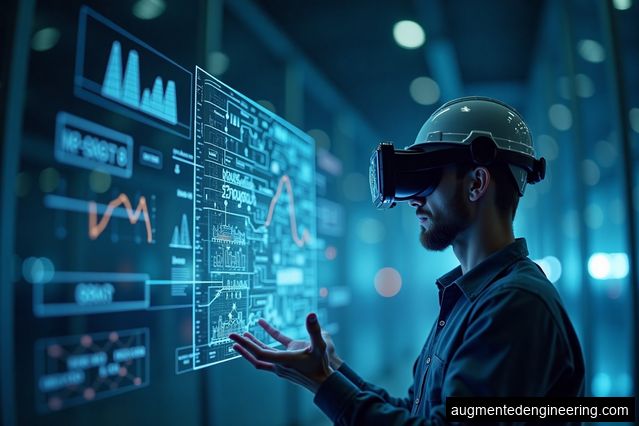
Enhancing Data Visualization with Augmented Reality
Civil engineering projects involve handling vast amounts of data, including 3D models, plans, and survey data. Traditionally, this data is visualized using computer screens or printed documents, which can limit the understanding and interpretation of complex information. Augmented reality revolutionizes this process by allowing engineers to superimpose digital data onto the physical world in real-time.
Improved Spatial Awareness
One of the key advantages of using AR in data visualization is the improved spatial awareness it provides. By overlaying 3D models onto the physical environment, engineers can better understand the size, scale, and relationships between different elements of a project. This enhanced perception helps identify potential clashes or design flaws that may not be immediately apparent on a flat screen.
Applications in Civil Engineering Projects
Augmented reality finds numerous applications in civil engineering projects, benefiting various stages of the construction process. Here are a few examples:
Site Analysis and Planning
During the initial stages of a project, engineers can use AR to assess the site and plan construction activities more effectively. By overlaying proposed designs onto the existing environment, they can identify potential issues and optimize the placement of structures or infrastructure. This allows for better-informed decisions and minimizes the need for expensive rework later in the project.
Advantages and Limitations of AR in Data Visualization
While augmented reality offers significant benefits for data visualization in civil engineering, it also has certain limitations that engineers should consider:
Advantages
AR enables real-time visualization of complex data sets, improving understanding and decision-making. It allows for better collaboration and communication among project stakeholders, as they can all view and interact with the same augmented models. Furthermore, AR can help improve safety on construction sites by providing real-time information and warnings to workers.
Limitations
One limitation of AR is the need for specialized hardware, such as AR headsets or smartphones with AR capabilities. This requirement may limit the accessibility of AR technology in some projects. Additionally, AR may present challenges in outdoor environments with changing lighting conditions or in areas with limited GPS coverage. Engineers should also be mindful of potential distractions caused by the use of AR and ensure it does not compromise safety or productivity.